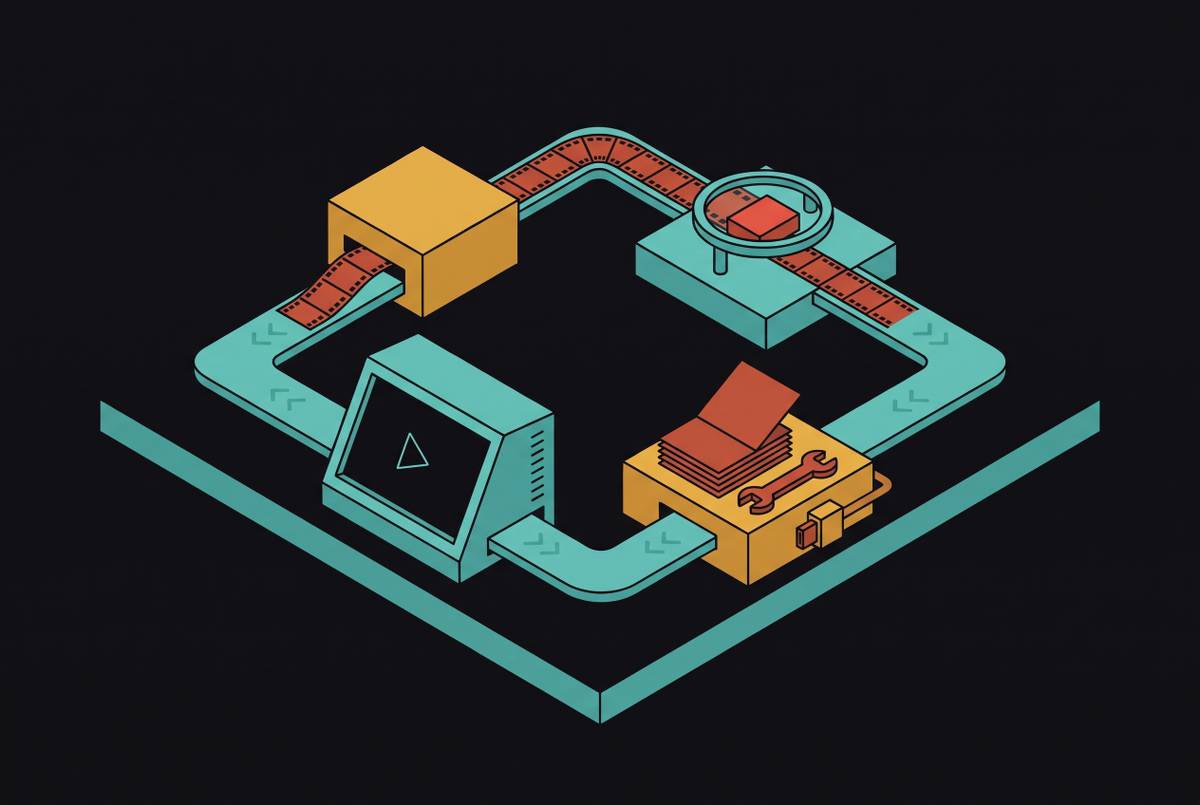
Canary Deployment Strategies for Agent Harness Changes
Replay your production traces against candidate changes before exposing them to users.
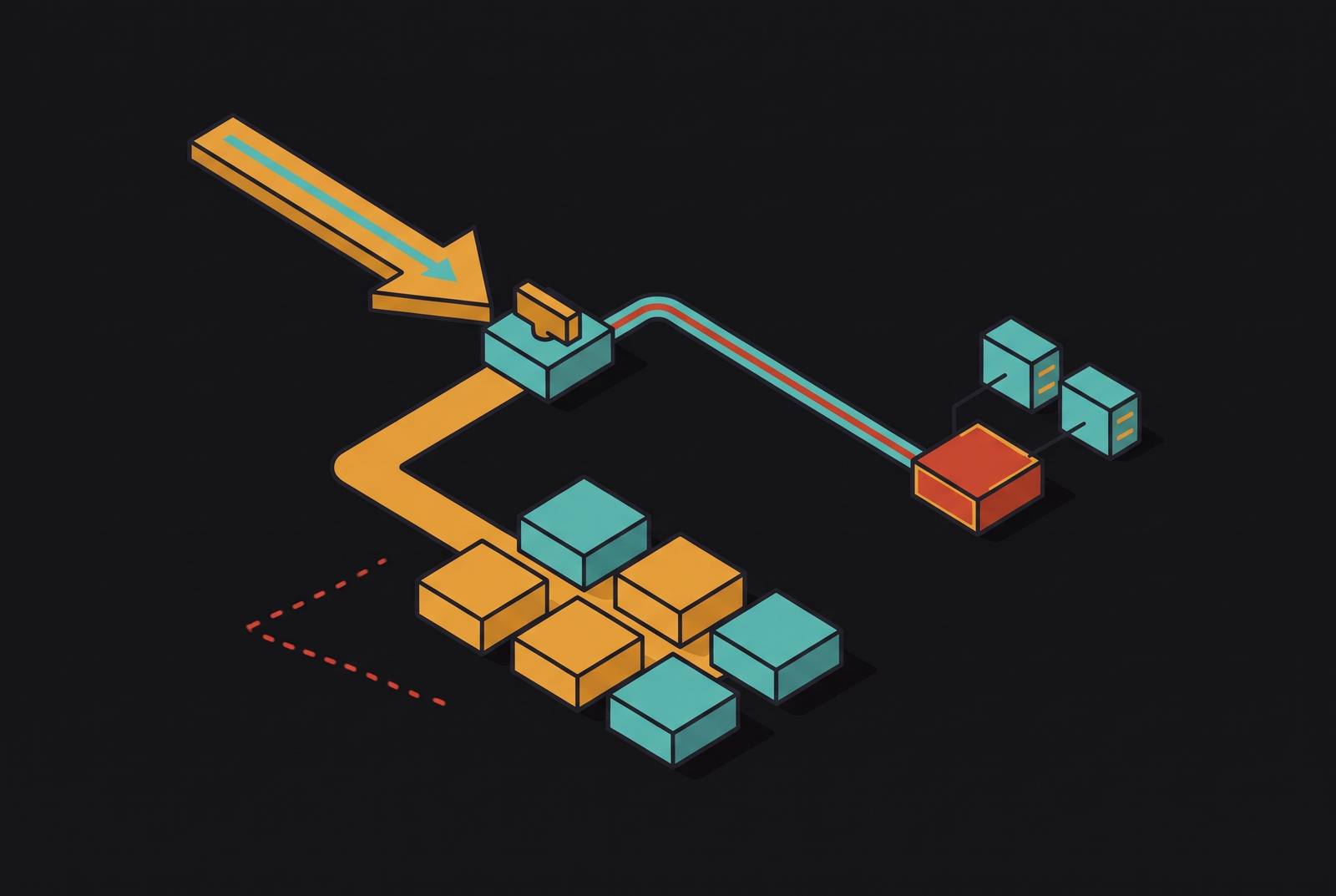
Canary deployment for agent harness changes requires trace-driven traffic splits, layer-attributed metrics, and replay validation before live exposure. Production traces should show which layer failed, guide a fix that teams can review, and become regression tests before that fix reaches users.
Why deploying a harness change is not like deploying a code change
An agent’s production behavior depends on its prompts, tool schemas, workflow logic, memory, and the model behind an API. These layers are interdependent. A prompt edit that changes which tool is selected first can lead to wrong state, stale context, or repeated retries several steps later. The final response may show the failure without showing what caused it, even as request-level monitoring reports that the run was technically successful.
Non-determinism makes that gap harder to interpret. The same input can produce meaningfully different outputs, so a small traffic fraction over a short soak window may not establish confidence. A harness canary needs hours or days to distinguish a changed output distribution from ordinary variation. Multi-step execution adds another complication because the operator must distinguish the step where behavior deteriorated from the step that caused it.
Standard canaries therefore remain useful, but their usual signals are insufficient. An HTTP error rate cannot establish whether an agent understood the task, used the right tool, or stopped at the right time. The instrumentation, metrics, and ramp logic need to be rebuilt around harness-layer semantics.
The three harness failure modes a canary must be built to catch
Tool schema drift starts when a provider changes an API field but the harness still expects the old name. Calls can return HTTP 200 with plausible but structurally wrong payloads. There may be no stack trace or alert. The response passes downstream validation until the defect becomes visible in a task outcome, so status-code monitoring misses it. Detection depends on inspecting response structure, including field presence, types, and schema version.
Prompt ambiguity produces behavioral drift while execution continues. A system prompt edit and a separate change to the expected JSON format can introduce inconsistent failures that appear three days into a canary. Minor wording changes can also degrade task quality or trigger unauthorized tool usage. Technical success is not task success. A customer support agent can show a low technical error rate while unresolved tickets escalate because it cannot determine what the customer needs.
Workflow loops start when an agent repeats a failed tool call without noticing that it has seen the error or received the information before. Ambiguous tool output, an underspecified goal, or a removed state check can cause the repetition. Without a retry budget or circuit breaker, the loop continues. Latency and inference cost rise before task failure rates necessarily change, so a dashboard without retry depth and cost metrics may miss the earliest warning.
These categories need different evidence, even when they show the same symptoms. A malformed tool response might cause a retry spike. Attribution must follow the execution trace backward to the responsible layer instead of assigning the failure to whichever component emitted the final error.
Instrumenting the canary correctly for each harness layer
Teams should capture span-based traces before opening the canary window. Each step needs inputs, outputs, tool call structure, retry counts, latency, and token cost so that a failed outcome can be connected to the decisions preceding it. Counts of success and failure at the request-boundary cannot show that link. The TraceElephant benchmark at ACL 2026 found substantially higher step-level attribution accuracy with full execution traces than with output-only logs. Trace completeness is therefore a prerequisite for reliable rollback signals.
The prompt layer needs task completion, escalation, explicit rejection, and behavioral consistency across repeated inputs, separated into canary and stable cohorts. The tool layer needs response conformance, retry rate, and the share of empty or null payloads. These expose different defects. The workflow layer needs retry loop depth, p95 and p99 latency, token cost per completed task, and runs exceeding the retry budget. The memory layer needs retrieval hit rate, how stale the retrieved state is compared with the current session, and how often it fetches information already in context.
MLflow Tracing captures inputs, outputs, latency, and cost across LLM and agent runs and is fully compatible with an open-source observability framework. Moda ingests production traces and attributes failures to the responsible harness layer, including prompts, tools, workflows, and memory. These capabilities address different parts of the operator’s task. Recording the execution makes it possible to diagnose the failure, while layer attribution helps show whether the candidate change caused the regression.
Traffic segmentation must preserve that diagnostic value. Teams should split a fixed slice of one intent class or enterprise tenant and keep unrelated traffic out of that comparison. Enterprise and free-tier users can have different cost, latency, and compliance thresholds, making pooled results difficult to interpret. Segmentation comes before traffic splitting. The instrumentation should also support shadow evaluation, in which production prompts reach the candidate for offline inspection without exposing its responses to users.
Replay validation against historical traces before the canary window opens
Replay validation is the gate before live exposure. Synthetic evaluations can pass while a candidate fails on the prompt distribution, tool schema mix, and user intents present in production. Teams should therefore run candidate prompts, schemas, or workflows against historical traces and compare outputs, tool call structure, task completion, and cost with the baseline harness. Shadow evaluation adds evidence from mirrored production prompts. Both still need to be followed by a live canary, which tests the candidate with a controlled share of real users after it passes this gate.
The comparison must preserve previously working behavior. A fix that improves its target cases by breaking successful cases should be rejected during candidate selection, before promotion. RELAI-VCL in 2026 incorporates this no-regression constraint into searches across prompt changes, tool patches, workflow modifications, skills, and code edits. Known failures also need explicit coverage. The Who&When Pro benchmark from 2026 constructs labeled failed trajectories by replaying a successful prefix and injecting a single failure, providing a structured way to test failure attribution.
Available tools support parts of this sequence, but their boundaries need to remain clear. MLflow’s Trace-to-Playground workflow lets a captured trace or span be rerun and the result saved as a new trace for comparison. That is not a documented automated trace-diff capability. AWS AgentCore Optimization analyzes production traces for prompt and tool recommendations, validates them through batch evaluations, and uses A/B tests with statistical significance before promotion. Harness AI Evals can gate a delivery pipeline on correctness, performance, and safety scores.
For teams using Moda, historical traces connect failure diagnosis directly to candidate validation. It attributes failures to harness layers, generates concrete fixes, and validates them against those traces before recommending what to ship. The output is a reviewable change with supporting evidence. Only a candidate that clears this pre-exposure gate should enter the live traffic split.
What signals to watch during the canary window and how to read them
Leading indicators deserve attention before completed-task outcomes accumulate. Retry depth, p95 and p99 latency, and inference cost can rise as a workflow enters additional reasoning loops. Tool response conformance can deteriorate before schema drift reaches the final answer. These signals warn of an emerging regression. Their meaning comes from the trace, which can distinguish repeated attempts caused by malformed tool output from repetition caused by a missing workflow state check.
Lagging indicators establish whether the agent actually helped the user. Task completion compares intended outcomes across canary and stable cohorts, while escalation and abandonment expose unresolved work hidden by successful HTTP responses. Token cost per completed task then shows how much the agent spends on tokens for the work it finishes. Quality alone is insufficient. A candidate that doubles inference cost is a regression even if task completion holds. Its cost threshold must therefore be set before exposure.
Signal quality also depends on the traffic actually served. Teams should compare observed traffic share with the configured route weight throughout the window, including whether high-value or high-risk tenants receive disproportionate exposure. A nominally small split does not bound risk if routing delivers a different cohort. Cohort integrity is part of the experiment.
The minimum sample size, confidence threshold, and soak duration must be defined before the ramp starts. Non-deterministic outputs require enough evidence to separate regression from noise before advancing, even when the dashboard is quiet. Hard stop conditions should cover eval-fail-rate-by-cohort, p99 latency, fallback activation count, and cost per trace. Writing them in advance prevents the operator from redefining acceptable behavior after a candidate starts failing.
When to roll back, when to advance, and the identity-stability problem in between
Teams should increase traffic only when every advance criterion is met for the whole required soak window. Task completion must be statistically non-inferior to that of the stable cohort, and tool response conformance must show that there is no structural regression. Retry depth and p95 latency must remain within their predefined thresholds. The cost per completed task must stay within the budget. Escalation and abandonment must not rise relative to the stable cohort, and the comparison must retain the sample size and confidence required by the experiment.
Rollback requires only one breached stop condition. An eval failure rate above threshold is sufficient even when HTTP error rates remain clean. High p99 latency or token cost can point to loops that would grow worse at full traffic, while a drop in conformance points to silent schema drift. Rising escalation or abandonment means the agent is not completing its work. A material divergence between observed traffic share and configured weight also warrants rollback because the intended exposure bound no longer holds.
Insufficient evidence is not evidence to advance. If no rollback trigger has fired but the cohort has not reached the required confidence or soak duration, the decision remains pending. Prompt regressions need not wait for a service redeployment to reverse. Harness AI Configs supports instant rollback of prompt and model changes through feature flag infrastructure, as described in Harness’s July 2026 release.
Safety-critical, regulated, and robotics deployments face an additional constraint. ICAN-Deploy in 2026 identifies that Argo Rollouts, Spinnaker, and Flagger change the deployed system’s cryptographic identity during the canary window. That is harmless for stateless microservices but problematic when certification, operator trust, and the audit chain depend on a stable identity. Each ramp step can require re-certification.
The paper proposes separating frozen, hashed capability names from mutable capability versions to keep the identity hash invariant across canary transitions. It reports 100 real canary cycles on a Franka Panda arm in MuJoCo with zero identity drift, while a feature-flagged alternative that includes versions in the manifest fails on the same workload. The distinction limits the certification claim. Within the proposed version-and-name envelope, prompt and tool version changes preserve identity, while adding or removing a tool or renaming a skill requires a new certification event.
Closing the loop: turning canary signals into the next harness improvement
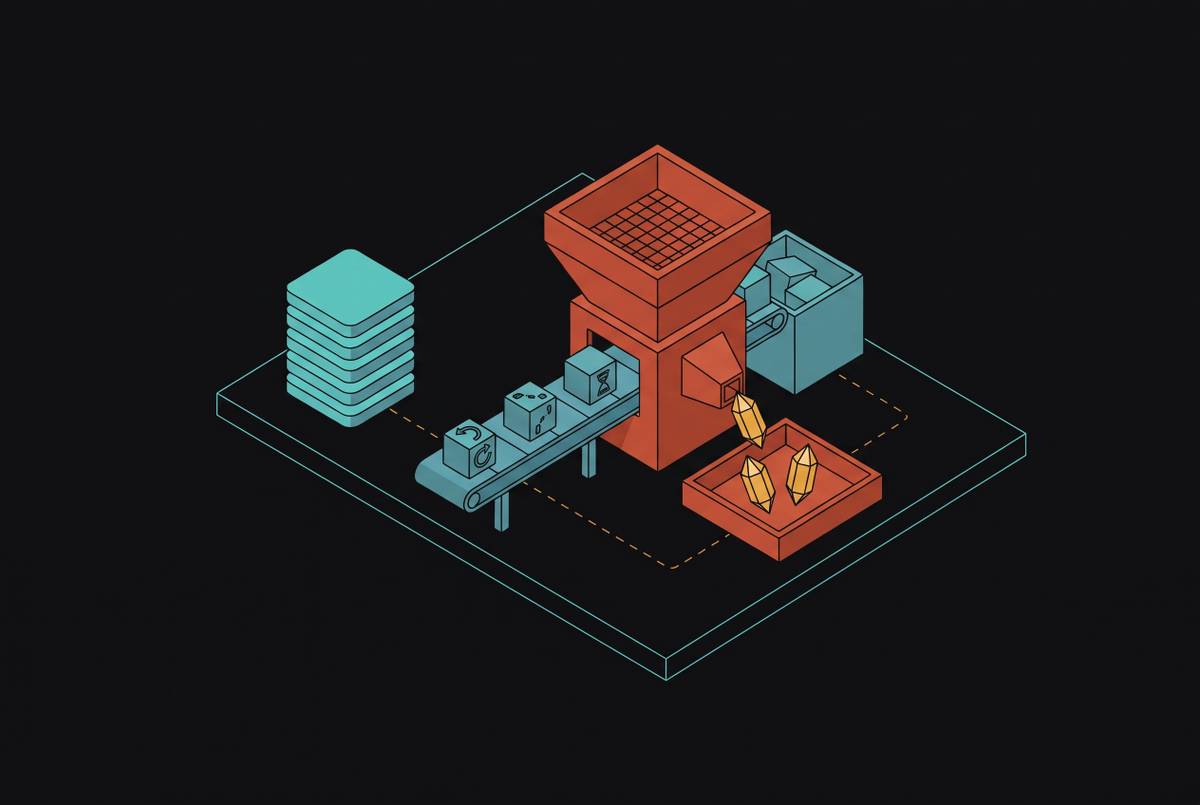
A completed canary should leave a labeled trace corpus alongside a release decision. Failures, regressions, and near-misses become test cases that the next candidate must pass. Layer attribution makes those cases actionable. Instead of treating a poor answer as a general model problem, the improvement process can target the prompt, tool contract, workflow, or memory behavior that caused it.
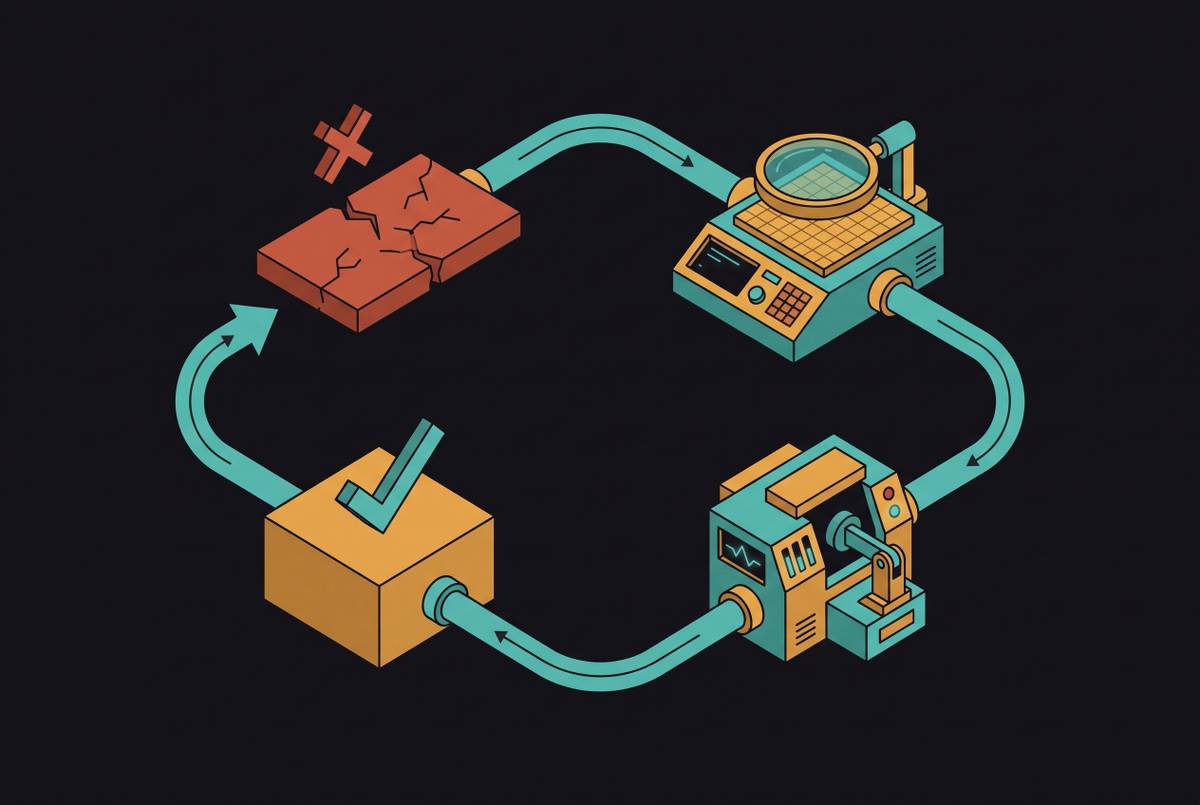
AgentDebugX in July 2026 describes a closed debugging loop with distinct responsibilities. Detect identifies step-level errors, Attribute locates root causes, Recover proposes ranked fixes, and Rerun regenerates the trajectory around the failure point. Hard cases escalate to DeepDebug for a multi-round diagnosis and an auditable report with evidence and a recommended fix. The sequence keeps diagnosis separate from intervention. It also makes the proposed improvement inspectable before another deployment decision.
The same production-to-validation sequence underlies Moda’s role in this loop. It uses the canary’s traces to attribute failures, generate reviewable improvements, and validate candidates against historical behavior before recommending the next release. Each fix that is accepted then goes through replay validation and controlled live exposure again. That accumulated regression coverage is what makes improvement compound over time.