LangGraph State Graph Debugging When Wrong Answers Propagate Without Raised Exceptions
Detect silent failures in LangGraph by comparing state snapshots across execution boundaries.
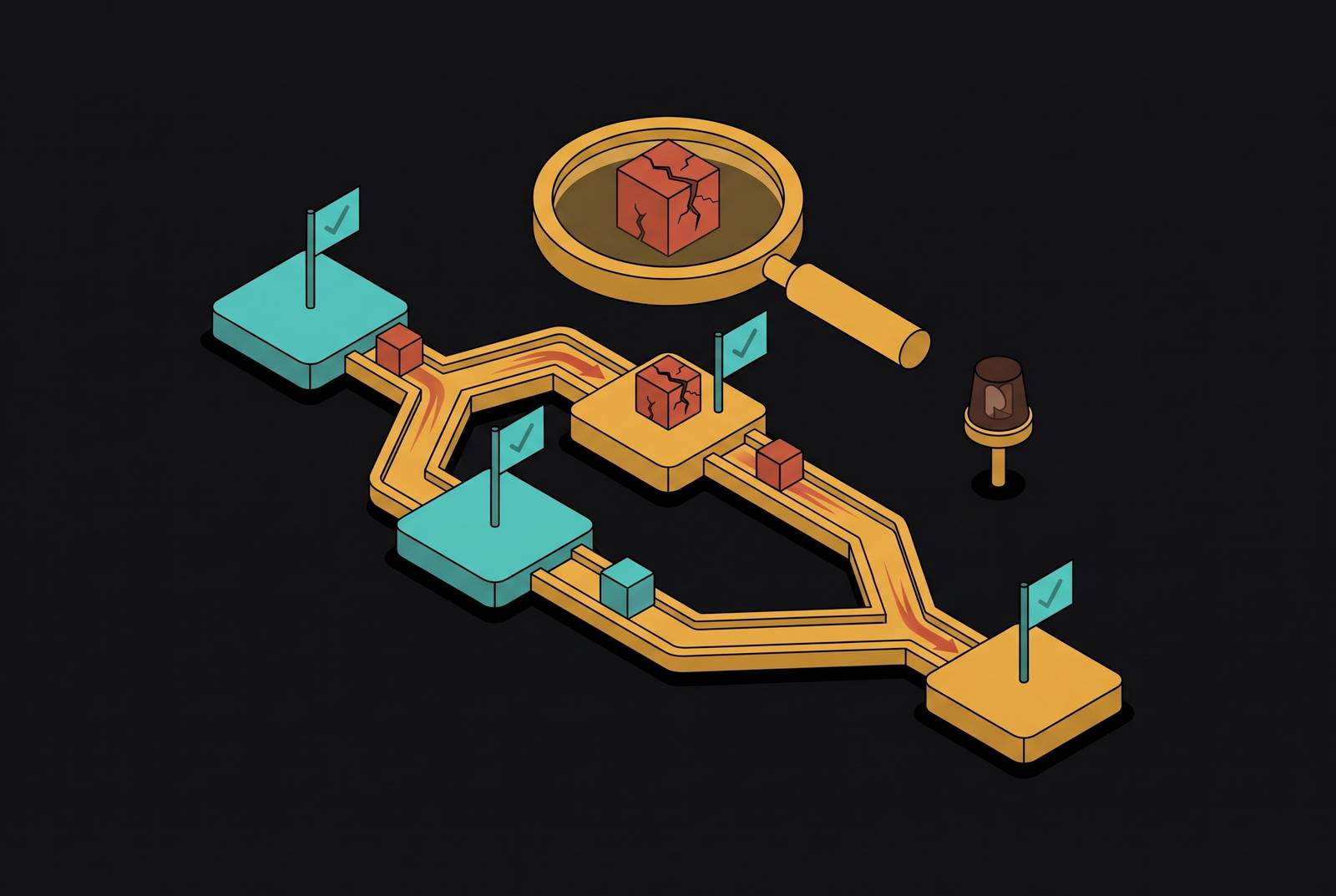
To detect silent tool failures in production multi-agent pipelines, raw tool responses must be compared with checkpoint state and execution traces, even when the run completed. In LangGraph, wrong answers can propagate through reducers, conditional edges, tool returns, and parallel writes without a raised exception. The remedy is to locate the first incorrect state transition, repair its responsible layer, and replay the failing trace to verify the intended execution path.
Why a LangGraph pipeline returns wrong answers but no errors
LangGraph separates successful execution from correct application logic. Its graph-based execution model runs nodes in the same superstep in parallel, merges their writes into channels through reducers, and commits the superstep as a unit. If a node raises an exception, the superstep discards its writes. Incorrect values need not trigger that protection. A node can calculate correctly from the wrong inputs, return an accepted update, and leave the graph free to continue.
A 19-node financial pipeline processing transactions across seven data sources illustrates the consequence. It exits cleanly while misclassifying tax jurisdiction on ambiguous transactions for weeks, because the formula runs correctly on incorrect inputs and monitoring does not flag the discrepancy. Completion is therefore the wrong diagnostic test. Diagnosis should establish whether the pipeline followed the path it was designed to run, using the state each decision was supposed to receive.
The four structural layers where wrong-answer propagation originates
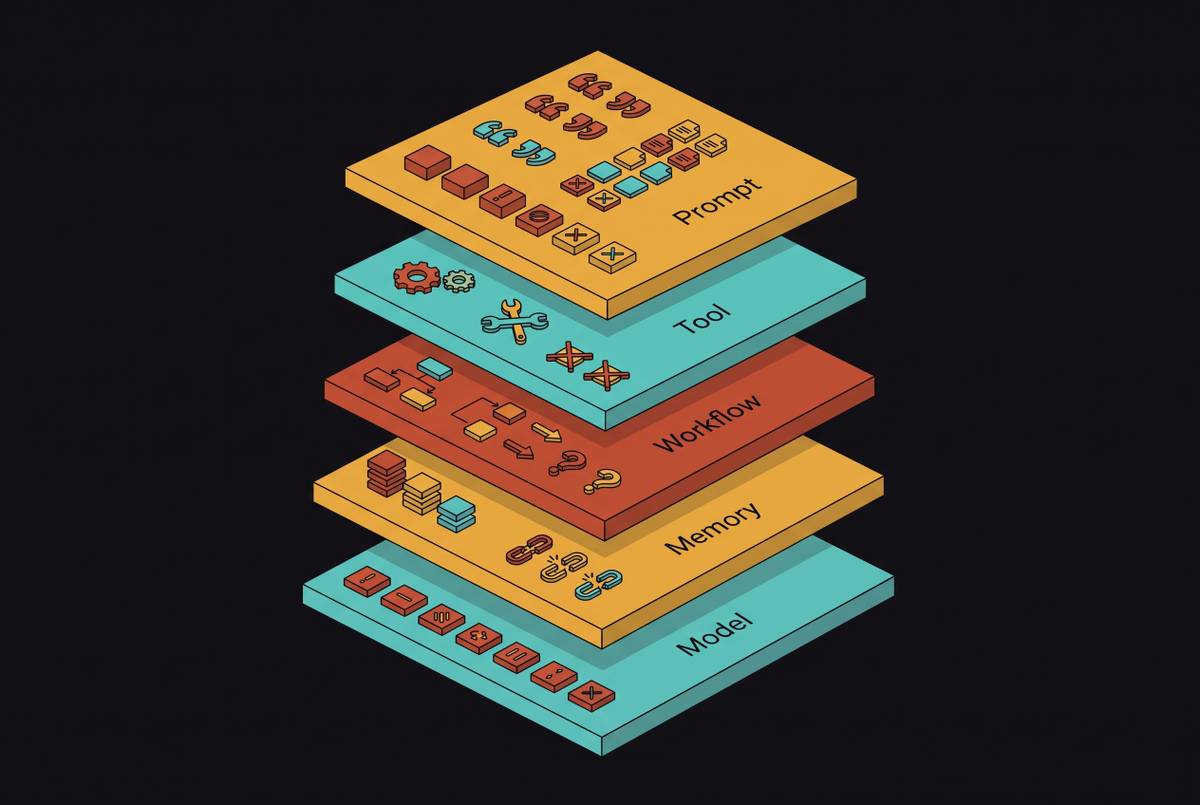
The first layer is reducer conflicts and state channel semantics. A node’s return value is not itself proof that its intended update reached state, because merging happens after the function returns. A subtle example is returning search_query when the schema expects query. The undeclared key is silently dropped. The node never sees that rejection, while downstream logic proceeds without the update the author expected.
The second layer is conditional edge misrouting. A routing function reads state and returns a node name, so the edge is deterministic control flow but can still take the wrong path. Its decision can pass a type check and still be wrong. As input distributions shift, classification confidence can drift and send most traffic down an unsuitable branch. Downstream output may remain plausible for weeks, concealing the routing error.
The third layer is silent tool returns. A tool node can return an empty array or a null payload without raising an exception, leaving the downstream LLM to fill the gap with a confident answer. Schema drift can cause the same failure to unfold more slowly. A prompt update in staging and a separate change to an external API’s JSON output format can leave production agents failing inconsistently days later. The call completed, but its result no longer meets the workflow’s needs.
The fourth layer is parallel write collisions and subgraph boundary failures. Nodes running in the same superstep can touch the same state channel, so correctness depends on how their updates meet. Some conflicts fail loudly with InvalidUpdateError. Wrong-answer states that depend on the input need a closer look, especially when the graph has taken only a single path in past runs. At this layer, the diagnostic target is the state handed across concurrent execution or a subgraph boundary.
Reading checkpoint state to find where the corruption entered
The first debugging action is to retrieve the failing thread’s checkpoint history. The checkpointer saves a full state snapshot per superstep, keyed by thread_id, and graph.get_state_history(config) returns those snapshots. They record what the graph believed at each boundary. Diffing adjacent snapshots exposes which keys changed and how, allowing the investigation to move backward from a wrong answer to the update that first made it possible.
A short inspection pattern is history = list(graph.get_state_history(config)), with config identifying the failing thread. After arranging the snapshots in execution order, a focused diff can compare before.values.get("query") with after.values.get("query"). The comparison asks whether the expected update appeared at the boundary where it should have appeared, rather than requiring a full reconstruction of every node’s internals.
For diagnosis, walk the snapshots in order and follow the suspect key. The first unexpected value, whether null, incorrect, or stale from a previous node, identifies the superstep where corruption entered the recorded state. Then cross-reference that boundary with the nodes that ran. If two nodes in the same superstep both touch the key, a reducer conflict becomes a candidate cause.
Missing keys require a slightly different reading. If the expected key is absent, inspect whether the responsible node returned it under another name or whether the update was dropped. The snapshot does not, however, mark a value as semantically wrong, so the expected state must be based on what the workflow is meant to do. Checkpointing enables inspection and replay after a failure is identified. It does not identify the failure by itself.
Production debugging also depends on retaining that history. MemorySaver is insufficient when the investigation must survive a restart, while a persistent checkpointer such as PostgresSaver or SqliteSaver retains the record needed for later replay. Persistence is part of the diagnostic setup. Without the state immediately before corruption, validation loses the controlled starting point that distinguishes a repair from a fresh run that happens to succeed.
Tracing conditional edges and retried nodes to attribute the responsible layer
A snapshot shows what state existed, while a trace shows why the graph moved from that state to a particular node. The two records answer different questions. This distinction is especially useful in multi-agent runs, where failures are predominantly structural and arise in the agent framework. Edges, reducers, and tool returns are therefore the productive surfaces for attribution.
LangGraph coerces each routing function into a traced runnable that emits its own callback run, with the state it read as input and the node name it returned as output. Manual instrumentation is not required to capture that decision. The diagnostic record should retain the source node, target node, evaluated condition, result, and inputs that drove the choice, including a confidence score or parsed routing-model output where available.
Knowing that the graph reached node B does not reveal whether it followed an appropriate classification or accepted a mid-range confidence score on unsuitable inputs. Structured routing data makes that distinction auditable. It also supports queries about inputs associated with low-confidence decisions, nodes with variable routing distributions, and cases that later required correction. A sustained wrong turn then becomes a pattern in recorded decisions.
Retries need separate attribution because repetition can resemble ordinary progress. LangGraph’s default retry_on policy retries known transient errors, including ConnectionError and HTTP 5xx, as well as unrecognized exceptions outside an explicit non-retryable list. That list includes ValueError, TypeError, RuntimeError, and OSError, among other common errors. A novel exception can therefore be retried before being surfaced. A running edge-fire count helps distinguish a loop converging on an answer from one that is stuck.
At the tool node, capture input state, output state, tool call arguments, and the raw tool response. The raw response shows whether the tool returned data it could use, while the state diff shows whether the node overwrote a key needed later. An empty response followed by a confident answer points to the tool boundary, while a response with usable data followed by damaged state points to how the node updates or merges state.
Fixing reducer conflicts and conditional edge misrouting at their source
Once the checkpoint diff and trace identify the responsible layer, the repair should target that mechanism. A list channel whose writers need to append rather than overwrite requires explicit merge semantics. In a TypedDict, the field’s type annotation can use Annotated[list, operator.add] to configure concatenation. This is a narrow, reviewable change.
When a node returns search_query but the schema declares query, the node’s return dictionary must use the declared name. Changing the routing cannot bring back an update that never reached the channel it was meant for. Nodes should return a new dictionary with only the keys being updated, because LangGraph merges that return value into the state already there. Direct mutation of the state object does not persist as the required update.
Parallel writers require an explicit choice about their relationship. If their values should combine, a reducer must define that combination. If they should not write together, the graph should place the writers in separate supersteps. Serialization and merging solve different problems. The checkpoints should show which repair fits, because an intermittent error that stops appearing does not prove that the shared channel now has the right semantics.
Every routing node should emit its chosen branch and a confidence margin as structured data, with alerts on changes in the branch distribution. Route-share changes can precede obviously incorrect downstream numbers. Loop repairs also need a check of the terminal condition, since a conditional edge needs a path that returns END to allow the intended exit. Every routing function needs a terminal branch written into it.
Silent tool returns require a repair at the tool boundary. Validate the output schema inside the tool node before returning an update, and turn an empty or schema-mismatched payload into an explicit typed error state. An error flag in graph state lets conditional edges choose a fallback. With LangGraph’s native conditional edge retry pattern, the checkpointer records each retry attempt, making the recovery path available for inspection.
Validating that a fix changes the execution path, not just the output
A plausible answer after a patch does not establish that the patch worked. The original wrong path may still produce an acceptable-looking result for the replayed input, especially when downstream generation conceals missing data. Validation must inspect the responsible transition. For a routing repair, that means confirming that the edge now selects the intended branch. For a reducer repair, it means confirming that the corrected state reaches the nodes that depend on it.
Replay should start from the production state that showed the bug. Because checkpoints retain the full state at each superstep, the state immediately before corruption can be injected into the patched graph. This creates a controlled comparison. The investigation can then compare the old and patched routing decisions, state updates, or fallback behavior at the exact boundary under repair, instead of relying on a fresh input that may take another path.
Regression tests should cover more than that single replay. Smoke tests establish basic path coverage by showing that every branch of every conditional edge is reachable. Core tests check failures seen in production, including the wrong tool choice, misrouted branches, and empty tool returns. Torture tests check boundary inputs that involve low-confidence routing, retry exhaustion, and parallel writes.
Replay corpora also depend on the tool contracts they record. Renaming a tool or changing its schema can make recorded conversations that call the old tool impossible to replay, so schema changes require a corresponding corpus update. Otherwise, the comparison no longer represents production. Before shipping, the repaired graph should pass the original failing replay and the tiered regression suite, with evidence that the identified edge, merge, or tool boundary now behaves as intended.